They didn’t call it a war. But we’re paying for it anyway.
On a Tuesday morning in early March, the price sign at the Shell gas station on 22nd St. and Capitol Ave. flipped again. Regular unleaded: $3.49. It was $2.98 the week before. The attendant shrugged when asked why. “Something about Iran,” he said.
That something is a conflict the United States government will not officially call a war — even as it has launched nearly 900 strikes, killed a foreign head of state, and drawn retaliatory missile fire across the Middle East.
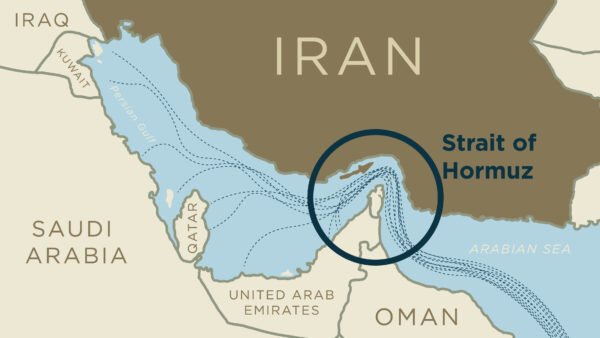
On Feb. 28, 2026, U.S. and Israeli forces struck Iran. Supreme Leader Ali Khamenei was killed within hours. Iran closed the Strait of Hormuz, the narrow waterway through which one in five barrels of the world’s oil passes. Within days, gas prices in Indiana had jumped nearly fifty cents a gallon.
“The entire country can be taken out in one night,” President Trump stated at a White House press conference on April 6, 2026.
The Trump administration described the opening strikes as “major combat operations.” Not a war. The distinction is not semantic; it is constitutional. Because if it is a war, Congress has to answer for it. Under the U.S. Constitution, only Congress has the authority to declare war. Congress was not asked.
A bipartisan group of senators attempted to require congressional authorization. The effort failed. Senator Todd Young of Indiana voted against it, warning that limiting the president’s options at a “critical moment” would do more harm than good.
The reason has shifted since the first bombs fell. Administration officials have described the goals as preventing a nuclear weapon, destroying Iran’s missile program, securing oil routes, and achieving regime change. Joe Kent, the president’s director of the National Counterterrorism Center — nominated by Trump and confirmed by the Senate, resigned over this war. His parting statement was four words: “Iran posed no imminent threat.”
“Kent knows what it costs to send Americans to war. He said this one wasn’t worth it.”
Kent is a retired Green Beret who completed eleven combat deployments. His wife, Shannon, a Navy cryptologist, was killed in a terrorist bombing in Syria in 2019. He knows what it costs to send Americans to war. He said this one wasn’t worth it.
The International Atomic Energy Agency (IAEA) said there was no evidence of an active nuclear weapons program when the war began. The administration has offered at least five different explanations for why the war began. Each one has shifted as the last became difficult to defend.
Iran’s response to the strikes was immediate. Hundreds of drones and ballistic missiles struck US bases in Bahrain, Jordan, Kuwait, Qatar, Saudi Arabia, and the UAE. The Strait of Hormuz, through which $1 trillion in global trade passes each year, was closed.
The closure triggered what the International Energy Agency (IEA) called the largest oil supply disruption in the history of global markets.
| 2026 Timeline of key events | |
| Jan | Iran massacres thousands of protesters. Trump threatens that those responsible will “pay a very big price.” |
| Feb 24 | State of the Union: Trump accuses Iran of reviving nuclear weapons program. |
| Feb 28 | The US and Israel launched nearly 900 strikes. Khamenei killed. Trump calls it “major combat operations.” |
| Early March | Iran closes the Strait of Hormuz. Global oil markets enter historic disruption. Indiana gas prices surge. |
| Mar 5 | Congress votes down the War Powers Resolution. Senator Young votes to let Trump proceed unchecked. |
| April 7 | Trump threatens “a whole civilization will die tonight.” A ceasefire was reached two hours before the deadline. |
| April 8 | Two-week ceasefire holds. Strait partially reopens. Negotiations continue. |
That is the official record. This is what it cost. As of this week, a two-week ceasefire is in place. The Strait of Hormuz is partially open. Negotiations are continuing through Pakistani and Egyptian intermediaries. No one — not the White House, not Tehran, nor the analysts tracking oil futures — knows what happens next.
What is known is here in Indianapolis, the price at the pump on 22nd St. and Capitol Ave. is $4.16 this morning — up more than a dollar in five weeks. The average Hoosier household will spend an estimated $740 more on gas this year, according to economists at the Stanford Institute for Economic Policy Research. Indiana Governor Mike Braun announced a 30-day suspension of the state gas tax. Still, even that relief has limits — the cost of groceries will rise because fertilizer and diesel move food, and no governor can suspend a war.
The war has already cost the United States more than $40 billion, and the Pentagon has requested an additional $200 billion supplemental from Congress. That number will grow. These are real costs. And they are already here.
“They are not calling it a war, but in 12 hours, there were 900 strikes.”
They are not calling it a war, but in 12 hours, there were 900 strikes. They are not calling it a war, but gas rose from $2.98 to $4.14. They are not calling it a war, but Hoosier families will pay $740 more this year just to move through their own lives. Forty days in, it still doesn’t have a name.
The president of the United States threatened, in public, to wipe out an ancient civilization unless it opened a shipping lane. No court stopped him. No vote was held. No declaration was made. Most of Congress looked away. And within 24 hours, the world had largely moved on to the next story.
This is not normal. It has never been normal. And the only people with the power to say so — clearly, on the record and with their names attached — are the citizens of this country and the representatives they elect.
Those questions will not answer themselves. They will only be answered if enough people decide they are worth asking.

LaTASHA BOYD JONES
Tasha Jones is a poet, writer, researcher, and educator whose work explores language as a tool for liberation and resistance. She hosts In the Beginning: The Spoken Word Podcast, the #1 spoken word podcast on Apple and Spotify. Tasha is also the Poems & Parables Literary Journal editor and is currently writing Pyramids. Plantations. Projects. Penitentiaries. You can follow her on social media: @iamtashajones, @itbspokenwordpod, and @poemsandparables.