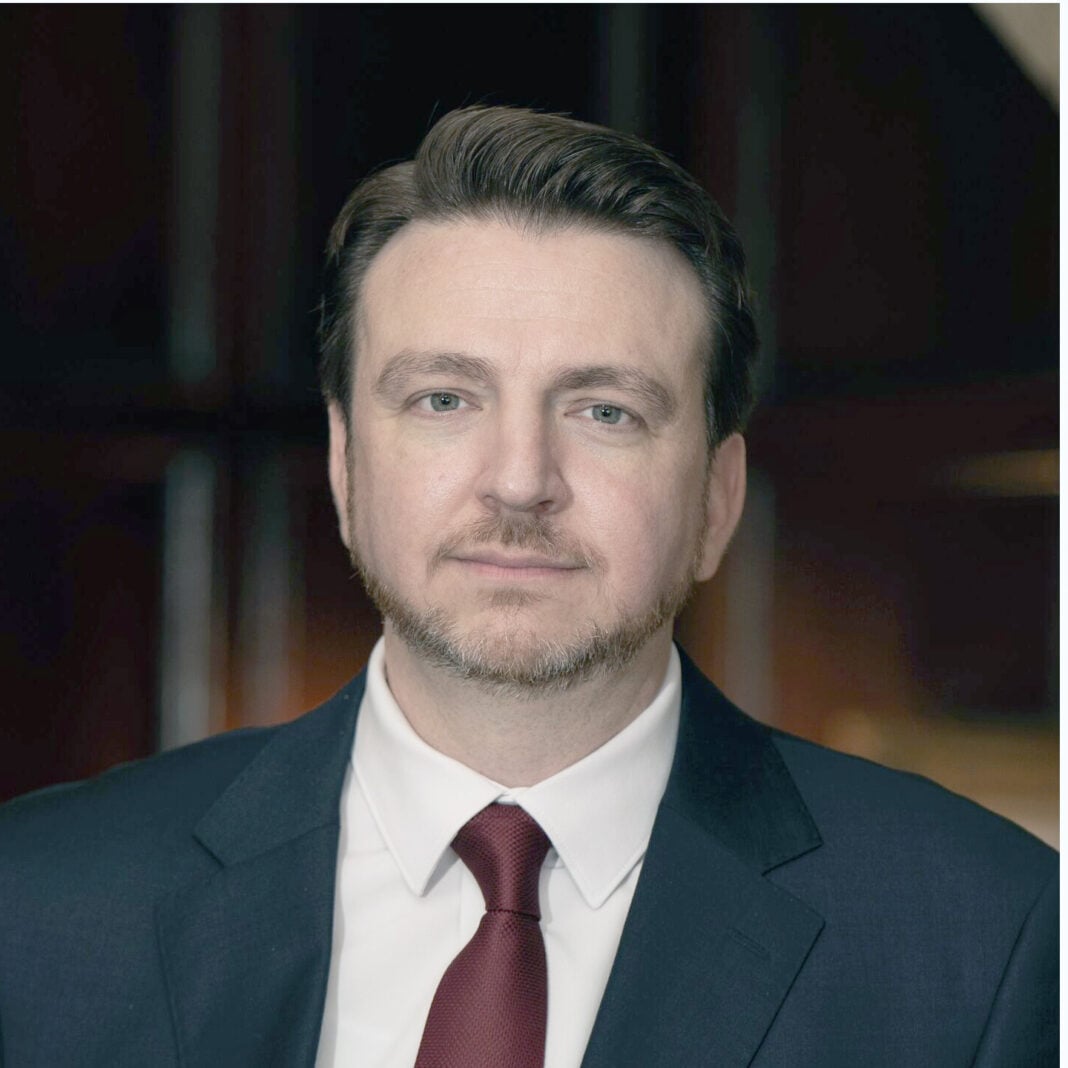

Philip Foust, a Republican, is running against incumbent Ryan Mears (D) to become Marion County Prosecutor. Foust is a former deputy prosecutor in Mears’ office.
A graduate of Indiana University-Purdue University Indianapolis and Harvard Law School, Foust has worked as an attorney and now serves as the Clerk-Treasurer for the Town of Speedway.
In an email Q&A with the Recorder, Foust shares his views on criminal justice, youth gun violence and second chances.
Questions were sent to Philip Foust and his unedited responses are below.
How do you determine who belongs in the criminal justice system?
Philip Foust: Criminal charging decisions should be based on the facts and the law, not the status or power of the offender.
When determining what sentence to pursue, a prosecutor should weigh the seriousness of the offense, the defendant’s history, and the impact on victims and the community.
We should reform those who we can. A small group of offenders commits a disproportionate share of serious crimes. Those violent and repeat offenders belong behind bars so that they cannot victimize more innocent people.
What does it take to make diversion successful?
Foust: The right candidate for a diversion is a first-time, non-violent, low-level offender, in a case with no specific victim or a victim who supports it. In those cases, a diversion can redirect someone before criminal behavior becomes a habit. Diversions work best for offenders who are remorseful, take responsibility for their actions, and are motivated to change.
Additional obstacles such as drug abuse may require real supervision backed up by real consequences for failing to complete treatment. A program people can ignore without penalty makes a mockery of justice. Diversion is not a substitute for accountability, and it is not appropriate for violent crime or repeat offenders.
I will also work with genuine service providers so that addiction and mental health needs are flagged early, without turning the prosecutor’s office into a social services agency.
What must Indianapolis do differently to address youth gun violence?
Foust: Juvenile carjackings and shootings are a five-alarm fire that will not resolve itself. For most of the public, the juvenile system is shrouded in secrecy. For the teens who know it best, it is a joke; we have taught them not to fear consequences from the juvenile system.
First, we need transparency. The public deserves to know how lenient the Marion County juvenile system has become. Second, we need prosecutors and judges who will enforce clear standards and real consequences because stiffer penalties at the start of a teen’s criminal career give us the best chance to redirect them before the behavior hardens. Third, we must rebuild cooperation among our public safety partners. Basic proactive communication between police and prosecutors has broken down under Ryan Mears.
The prosecutor’s office should work alongside police, neighboring prosecutors, and the Statehouse. Juvenile crime does not stop at county lines, and requires an all-hands-on-deck approach.
What concerns you about social media’s influence on criminal behavior in youth?
Foust: Social media can turn a bad decision into a performance. Young people post about guns, stolen cars, and fights, and the algorithm rewards them. Social media can escalate conflicts and make crime appear consequence-free. This is why consequences must be visible and consistent. When teens see the system is serious, the glamour of criminal behavior fades.
Social media is also a tool for the prosecutor’s office: posts can provide evidence, and monitoring can help police and prosecutors identify threats early.
If elected, how would your office address racial disparities within the criminal justice system?
Foust: Justice must be applied evenhandedly. A person’s race, neighborhood, or political connections should never affect how the law is enforced.
The underreported disparity is for victims of crime, which disproportionately impacts minority communities. Those communities deserve a prosecutor who takes his obligation to protect them from criminals seriously. Equal justice means applying the law fairly and protecting every community.
What does it mean to give people a second chance after conviction or incarceration?
Foust: Second chances should not be the prosecutor’s main concern. Justice and protecting the public should always be the top priorities. But when someone has taken responsibility for their crimes, repaid their debt to society, and is working to rebuild their life, society should welcome that turnaround.
A second chance does not mean erasing what happened or ignoring the victim. It also does not mean repeated chances for those who keep victimizing others.
I will support reentry efforts run by credible community partners because a person who finds stable work and support is far less likely to reoffend. That opportunity comes after the consequence, not in place of it.
For more information about Philip Foust, visit philipfoust.com. Early voting is underway and the general election will be on Nov. 3.
Additional reporting provided by Recorder Contributing Writer Jessica Braidden.