



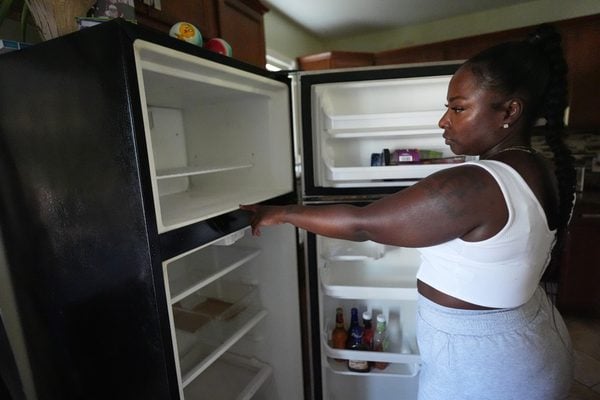
For nearly two weeks, thousands of people in Gary, Indiana, lived without something most of us rarely think twice about: electricity. After a historic storm tore through Northwest Indiana with winds approaching 100 mph, trees came down, power lines were destroyed, and critical infrastructure was severely damaged. Gary experienced some of the most widespread and prolonged outages in the region, leaving families to navigate days without lights, air conditioning, refrigeration, and many of the basic necessities that depend on electricity.
For residents, this was much more than an inconvenience. Families lost hundreds of dollars in groceries, businesses were forced to close, people searched for ice and generators, and some residents had to find somewhere else to stay. Seniors, people with disabilities, and those who depend on refrigerated medications or electrically powered medical equipment faced even greater challenges. Even after electricity is restored, many families will continue dealing with the financial and emotional impact of what happened for weeks and months to come.
As someone who grew up in Gary and still has family there, watching this unfold was deeply personal. There have been far too many moments throughout Gary’s history when it felt like our city and the people who call it home were expected to simply make do with less attention, fewer resources, and less investment. This crisis brought those feelings back for many of us, but it also brought something different: people across Indiana and throughout the country were watching what was happening in Gary.
My hope is that they continue paying attention now that the lights are coming back on.
This is bigger than one elected official
I want to thank Mayor Eddie Melton, Ellis Dumas III, city employees, first responders, community organizations, churches, volunteers, businesses, neighbors, utility crews, and everyone who worked to support residents during an incredibly difficult time. There will always be opportunities to evaluate what worked, what did not, and what could have been done differently, but I don’t believe the most important lesson from this crisis is about placing responsibility on one mayor or one local administration.
What happened in Gary should remind us that the systems affecting our everyday lives are much bigger than any one elected official. Local government matters, but so do state government, the federal government, regulatory agencies, utility companies, emergency management systems, and the corporations entrusted with providing essential services. When one part of that system is not adequately prepared or responsive, communities feel the consequences.
That is also why elections matter at every level. The people we elect make decisions about infrastructure investments, emergency preparedness, utility regulation, disaster assistance, public budgets, and the agencies responsible for protecting residents. We cannot only pay attention when there is a presidential election or when something goes terribly wrong. Municipal elections, state legislative races, congressional elections, and every office in between help determine who has a seat at the table when decisions affecting our communities are made.
We also have to talk about NIPSCO
Any serious conversation about what happened in Gary must also include NIPSCO. There is no question that this was an extraordinary storm that caused extensive damage across Northwest Indiana, and I appreciate the utility workers and crews who spent long days working to restore electricity under difficult conditions. At the same time, appreciation for the people doing the work should not prevent us from asking important questions about the systems and corporations responsible for ensuring our communities have reliable infrastructure.
When residents are left without electricity for nearly two weeks, accountability is necessary. We should be asking whether enough was invested in infrastructure before this storm, whether vegetation and trees near critical power infrastructure were being adequately managed, whether communities were sufficiently prepared for an emergency of this magnitude, and what NIPSCO will do differently before the next major storm arrives.
These questions are not about attacking a company or diminishing the severity of the storm. They are about recognizing that electricity is an essential service and that residents deserve transparency from the entities responsible for providing it. When families have little practical choice about who supplies their electricity, the responsibility of that utility to prepare, communicate, invest, and respond becomes even more important.
Gary should not have to become a national news story before questions are asked about the infrastructure serving its residents.
Why your vote matters
This experience is another reminder that voting is about much more than choosing candidates whose names we recognize. Elections determine who writes the laws governing utilities, who appoints or influences regulatory bodies, who determines infrastructure priorities, who advocates for disaster assistance, and who has the power to demand answers when systems fail the people they are supposed to serve.
Our responsibility as voters cannot begin and end every four years. We have to participate in local elections, state elections, and federal elections because decisions at each of those levels eventually find their way to our neighborhoods, our businesses, and our homes. We also have to remain engaged between elections by paying attention to public meetings, contacting our representatives, following how public dollars are being spent, and understanding which government agencies regulate the corporations providing essential services.
Voting will not prevent every storm or immediately solve decades of infrastructure challenges, but elections determine who is responsible for preparing our communities before emergencies happen and who will fight for resources when they do. That makes participation one of the most important tools we have for demanding stronger, more responsive systems.
You can check your voter registration, find your polling location, and learn more about upcoming Indiana elections through Indiana Voters.
Recovery will take longer than restoring power
We also cannot allow our attention to disappear once everyone’s electricity is restored. For many Gary and Northwest Indiana residents, the financial impact of this crisis will continue long after the power lines have been repaired. Families have lost food, missed work, paid for hotels and gasoline, purchased emergency supplies, and dealt with damage to their homes and property. Small businesses have lost days of revenue while still having bills and employees to support.
This is why recovery must be about more than getting the lights back on. It must include helping families replace what they lost, supporting small businesses, strengthening infrastructure, reviewing what went wrong, and making the investments necessary to ensure communities are better prepared for the next emergency.
For those who are able to help, the Legacy Foundation’s Greater Gary Storm Recovery and Relief Fund is supporting emergency relief and disaster response for Gary residents. I encourage anyone who has been watching what has happened in Northwest Indiana and wondering how they can help to consider making a contribution.
Donate to the Greater Gary Storm Recovery and Relief Fund
Gary is still standing
I could spend a lot of time complaining about what happened, and there are certainly reasons to be frustrated. But frustration by itself will not replace someone’s groceries, help a small business recover, strengthen our infrastructure, or change the policies and systems that allowed residents to remain without power for so long. What matters now is what we do with this moment.
For much of my life, there have been times when it felt like no one outside of Gary cared about what happened to our city. Now, people across the country have seen what Gary experienced, but they have also seen something those of us who love the city have always known: Gary is resilient. Our residents showed up for one another, community organizations responded, neighbors helped neighbors, and people continued pushing for the attention and resources our city deserved.
My hope is that this moment becomes more than another story about Gary overcoming hardship. I hope it becomes a reminder that communities should not have to demonstrate their resilience over and over again because the systems around them have failed to provide the investment and support they deserve.
So, as Northwest Indiana begins the long process of recovery, I hope we do two things: help the people who need us right now and remember what happened when it is time to vote.
Vote in local elections. Vote in state elections. Vote in federal elections. Pay attention to the people and institutions making decisions that affect your community, and demand accountability from both government and corporations entrusted with essential public services.
What some meant for bad, God will use for good.
Gary is still standing, and Gary is still fighting. My hope is that this moment reminds the rest of the country that Gary deserves more than attention when something goes wrong. It deserves sustained investment, accountability, advocacy, and a community of voters who understand that every election matters.
Belinda Drake is a wife, mom, executive and community leader. Read more on her Substack at belindadrake1.substack.com.







Blame Governor Braun , it’s all at his doorstep. He received over $100 MILLION in Federal funding, just received another $350-$400 MILLION award from Meta and all he’s done is raise the income limit for ANY assistance whatsoever but spent over $40 BILLION dollars on a sport’s arena for another state’s football team.
We pay state taxes all our lives on the assumption that should the time come and we need the help back that we’ve already paid in, it would be there. Only for him to raise the income guidelines making it impossible to get any help. It’s FRAUD plain and simple.
His own state auditor has issued that it takes a single person $70,000+ a family of 4 $240,000 a year just for the basics (housing, utilities, groceries and gas) not to mention health insurance, car insurance and basic essentials to live.
This is why we fought for independence from the British, ‘taxation WITHOUT representation ‘ it’s time to fight back and make our voices heard, protest, march the streets, bombard his office with emails and nonstop phone calls. Bring him back to OUR daily reality and struggle and VOTE HIM OUT and make him face responsibility for his illegal actions against hoosiers.