
Nearly every American has a link to cancer — but the link between pancreatic cancer and the Black community is especially tragic.
Pancreatic cancer is one of the deadliest cancers — less than 13% of patients live for more than five years after diagnosis — and Black Americans are more likely than any other racial or ethnic group to get it. Pancreatic cancer is more common among Black Americans, plus Black Americans are more likely to be diagnosed with it when it is more advanced and therefore inoperable.
The disproportionate impact on Black communities is illustrated by just some of the leaders lost to pancreatic cancer: D’Angelo, Aretha Franklin, Richard Roundtree, Joe Jackson, John Birks “Dizzy” Gillespie, William James “Count” Basie, Lorraine Hansberry, and in the Congressional Black Caucus, we’ve lost Representatives Sheila Jackson Lee, John Lewis and Alcee Hastings.
Yet recent breakthroughs offer hope. In May, researchers announced promising results for a new pancreatic cancer treatment approach, including a drug called daraxonrasib. Early studies suggest the treatment may help patients live longer — even double survival rates — when combined with chemotherapy, raising hopes for new options against a disease that has long been described as one of the most difficult to treat. Oncologists say this drug would revolutionize the way cancer is treated.
These advances did not happen by accident. They are the result of years of federally supported medical research conducted by scientists, physicians, universities and research institutions across the country. Medical research saves lives.
Tragically, though, the Trump administration is cutting medical research at historic rates. Slashing investments in research at the National Institutes of Health, Department of Defense medical research programs, and other federal agencies threatens to delay lifesaving discoveries and widen existing health disparities. That’s on top of cuts to Medicaid, Medicare and policies that have made health care more expensive and harder for patients to access screening, treatment and care.

It’s also no coincidence that at the same time, Trump continues to threaten civil rights protections and launched an anti-DEI campaign, eliminating DEI across the country. By eliminating medical research, Trump is putting Black families at higher risk.
That’s why I’m fighting to reverse these policies, reinvest in medical research and save lives. Patients with pancreatic cancer don’t have time to wait.
I led a bipartisan effort to establish the Pancreatic Cancer Research Program within the Department of Defense’s Congressionally Directed Medical Research Program, and increased the funding authorized from $5 million to $20 million.
If diagnosed early, the five-year survival rate for pancreatic cancer patients can be above 80%. But today, there is no screening test to detect pancreatic cancer early, when it’s more treatable. But you can learn more about risk factors that may increase the likelihood of getting pancreatic cancer, like family history, race, smoking, diabetes, obesity, age and others. You can take a risk assessment online here or at pancan.org.
I know firsthand that far too many Black families know the pain of losing loved ones to diseases that too often go undetected, untreated or under-researched. In addition to pancreatic cancer, I’ve fought to expand federal investments in medical research through initiatives like my Rare Disease Advancement, Research, and Education (RARE) Act to strengthen rare disease surveillance, improve physician education, expand research coordination, and help accelerate the development of new treatments for millions of Americans living with rare diseases.
I have also consistently advocated for robust funding for the National Institutes of Health and the Department of Defense’s Congressionally Directed Medical Research Programs which support groundbreaking research into cancer and other life-threatening illnesses.
Most recently, I passed an amendment to increase funding for the Department of Veterans Affairs Medical and Prosthetic Research Program, supporting critical research into cancer, toxic exposures, traumatic brain injury, PTSD, and other serious health conditions.
For communities that have historically been left behind by our health care system, medical research is more than a scientific endeavor — it is a pathway to equity, earlier diagnoses, better treatments, and more lives saved. At a time when Black Americans continue to experience disproportionately poor outcomes from diseases like pancreatic cancer, we should be expanding these investments, not cutting them.
There is much work left to do: making health care more affordable. Addressing primary care deserts, geographic areas — commonly in neighborhoods with minority and disadvantaged families — that lack access to primary health services. Initiatives that increase the racial and ethnic diversity of health care professionals and strengthen cultural competency training among health care providers. Improving the management of chronic disease, like obesity, diabetes and high blood pressure, to help the nearly 50% of Black people suffering from these treatable diseases.
We have work to do, but I’ll keep fighting — for our community, for our health, our wealth, and for a system that is fair and equal for all.
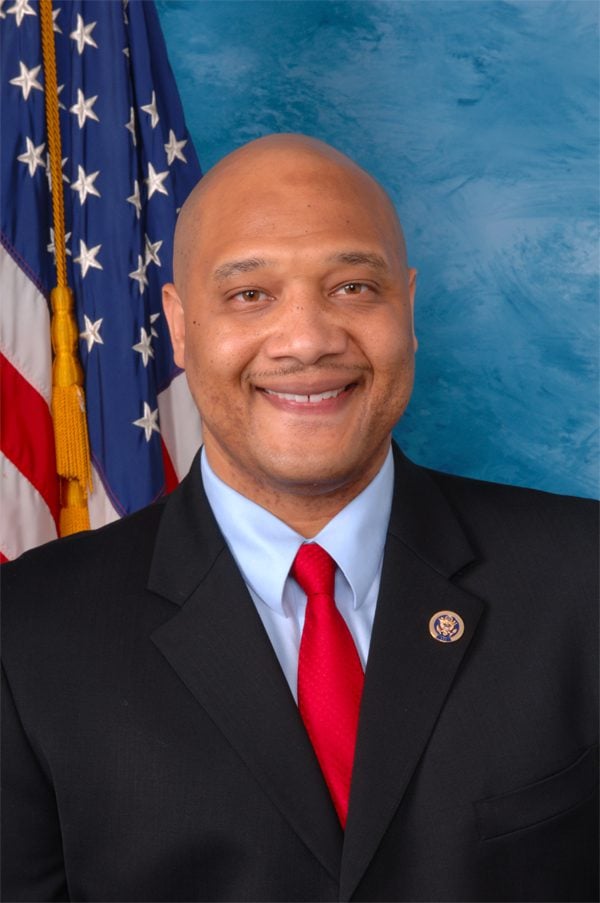
U.S. Representative André Carson represents Indiana’s 7th Congressional District. Learn more at carson.house.gov.