We tried to tell people what would happen if Trump was re-elected. But folks didn’t believe us.
On April 29, the Supreme Court’s Louisiana v. Callais ruling opened a new era of state-sanctioned racial discrimination by surgically neutering Section 2 of the Voting Rights Act (VRA).
We know that racism is hard to prove. The KKK hid behind their white robes and hoods to hide their intent and their identities as they carried out racial violence and discrimination.
This Supreme Court, in their black robes, just twisted the 14th Amendment — ratified to empower former slaves and their descendants. They insisted on colorblindness, claiming it’s hard to see from behind their modern-day hoods.
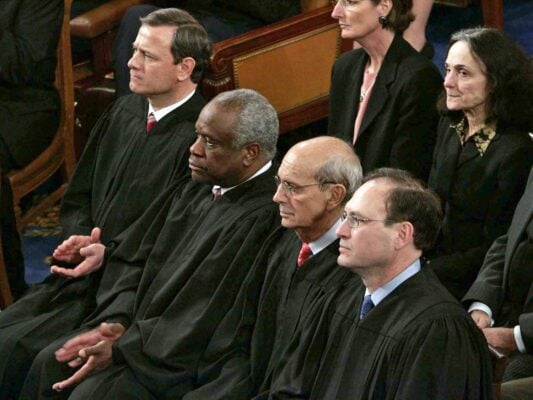
Their decision essentially claims that racial gerrymandering is illegal but political gerrymandering is allowed, even when it harms minority voters. It’s a double standard we are all too accustomed to — and it’s wrong.
But it’s hardly the first time the VRA has been undermined since its passage.
After the VRA, we made additional progress. Congress overturned a bad Supreme Court decision in Mobile v. Alabama (1980) when Congress explicitly eliminated the requirement to prove discriminatory intent to establish a violation of the VRA. In 1982, President Reagan signed a VRA reauthorization that said discrimination can happen even if it was unintentional. The law reflected what we know to be true: even if racism is unintentional, the damage is still there.
But in recent years, the courts have quietly but steadily eroded the power of the VRA. In 2013, Shelby County v. Holder landed its first blow, ushering in a new wave of discriminatory voting and redistricting laws. In 2021, the Supreme Court further limited the VRA’s protections in Brnovich v. DNC by restricting voters’ ability to challenge discriminatory voting laws in court.
The latest case, Louisiana v. Callais, came about because lower courts had rightly found Louisiana unlawfully suppressed Black representation in Congress for years, and ordered a fair redistricting map to correct long, persistent violations of the VRA. Despite a population that’s been at least 30% Black for decades, Louisiana didn’t elect their first Black representative to Congress until 1990. From 1990 to 2025, only one of the state’s six Members of Congress was Black, despite making up a third of the state’s population. That changed to two in 2025 — only after hard-fought litigation by the NAACP Legal Defense Fund.
Louisiana v. Callais ruled that these important, majority-minority districts can now be eliminated.
Instead of fixing the damage that persists from America’s original sin, the Supreme Court deliberately twisted and perverted the 14th Amendment to strip away rights from the descendants of slaves.
“It turns back the clock on 60 years of progress.”
It turns back the clock on 60 years of progress. Black Americans should be represented by people who know our concerns and consistently work to address them — not candidates who drop into the community once an election cycle.
We are living Plessy v. Ferguson all over again — the1896 ruling legalizing racial segregation and unleashing generations of Jim Crow’s “separate but equal,” state-sponsored discrimination.
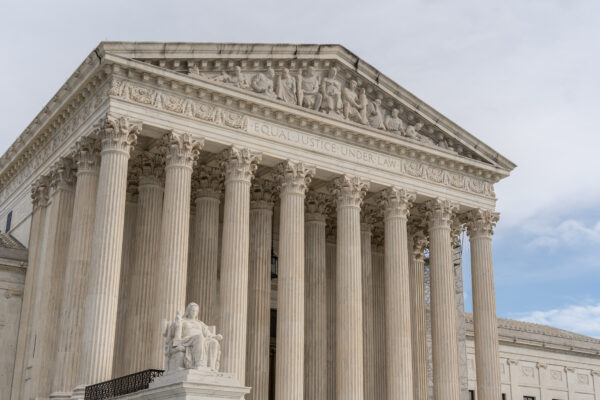
The Court blinded itself to the facts, the legacy of Plessy, and the persistent and active discrimination against minority voting representation in Louisiana today. The Court’s conservative majority pretended we’re living in a theoretical “colorblind” society that does not exist in the real world.
In the biggest insult to all who suffered beatings, lynchings and firebombs for our right to vote, that’s the opposite of justice.
Voting rights used to be a bipartisan issue. But the Supreme Court of Thurgood Marshall and Brown v. Board of Education is gone. It’s been packed with Trump-appointed ideologues.
“They’ve turned a blind eye to the systemic racism … we experience every day.”
The Supreme Court’s new ruling claims that we’ve made so much progress in our colorblind society that it’s hard to prove intent for racial discrimination. They’ve turned a blind eye to the systemic racism in Louisiana, and what we experience every day.
They basically ruled that if they don’t see it, racism can’t possibly be the motivation behind MAGA’s map mayhem.
As a result of this terrible ruling, minority voting rights are now more vulnerable than ever. Decades of electoral progress is in danger. States are already starting to draw districts that weaken Black voting power, and it will be much harder to challenge those maps in the courts. Many states have already halted election schedules and are drawing unfair maps—without consequences. At least 12 to 19 districts are at risk in Congress, plus countless state districts.
Congress should reflect the diversity of our country. Our representatives should represent the people — every person. The promise of democracy is only real when every community can elect representatives of their choice.
But there is a path forward.
Congress must pass the John Lewis Voting Rights Advancement Act to repair the damage done by this administration and this Supreme Court.
We also need Supreme Court reform, to ensure a fair court free from political pressure or systemic bias. My Congressional Black Caucus colleagues and I will work aggressively to advance Supreme Court reform, including legislation establishing term to help restore credibility, independence, and legitimacy to our nation’s highest court.
But to do this — we must work and fight together to regain Democratic majorities in the House and the Senate. Our strength at the ballot box this November must be undeniable. We must become too big to rig, defeating Donald Trump and Republican efforts to steal the midterm election and beyond.
The Supreme Court, Republicans, and Donald Trump think they can sell the myth of a color-blind society. Black people know that has never been the case. We can love our country and its founding values, while acknowledging America has never fully lived up to these values.
We’re not going to back down in the face of these new attacks on our rights — we’re going to stay clear-eyed and fight back.
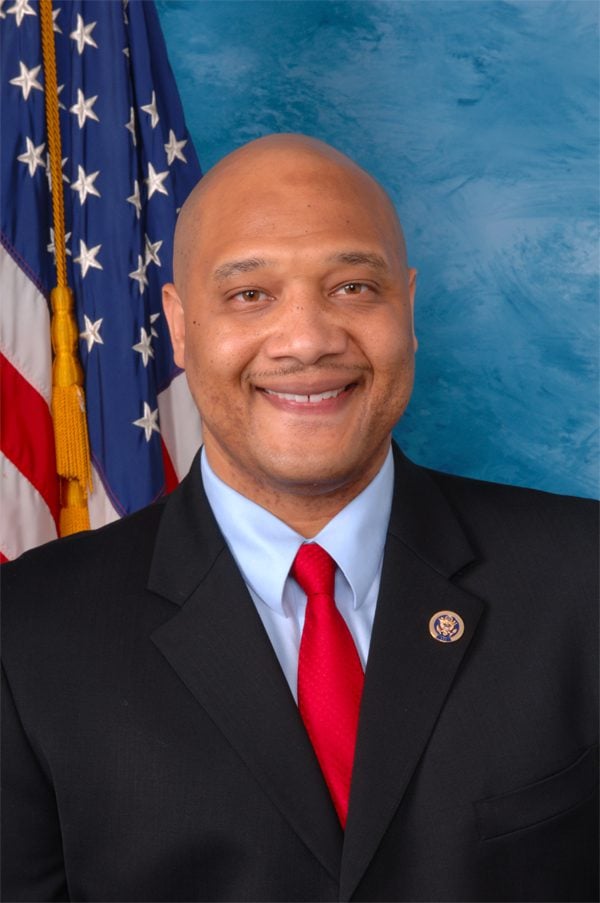
U.S. Rep. Andre Carson represents Indiana 7th District. Learn more at carson.house.gov.