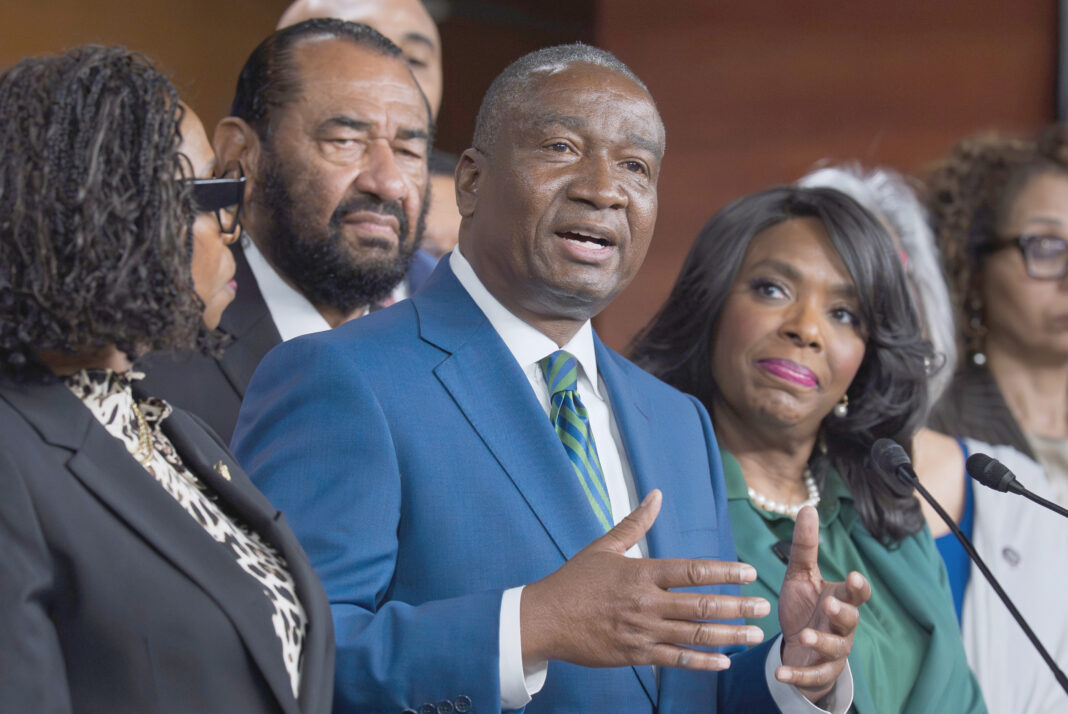
National and local leaders respond
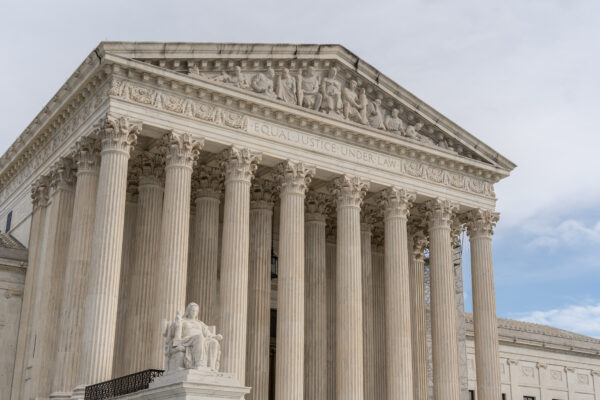
The Supreme Court of the United States (SCOTUS) ruled in a case that determined whether or not Louisiana’s congressional maps should include a majority-Black district. When the state drew a map that included this district, it was challenged as a “racial gerrymander.” The case also questioned whether the Voting Rights Act justified considering race in drawing districts.
“These and other problems convinced the Court that the time had come to resolve whether compliance with the Voting Rights Act can indeed provide a compelling reason for race-based districting,” as stated in Louisiana v. Callais et. al.
In a 6-3 decision, SCOTUS ruled that Louisiana’s map, which created a second majority-Black district in 2024, was an “unconstitutional gerrymander.” Justice Samuel Alito delivered the court’s opinion, stating that the Voting Rights Act was “designed to enforce the Constitution — not collide with it.”
Per the 2024 census, Louisiana’s population was 32.6% Black. After the court’s ruling, the map was sent back to the state to be redrawn.
What the SCOTUS decision means
Section 2 of the Voting Rights Act, was designed to ensure that states and political subdivisions did not intentionally discriminate based on race or color.
“The basis of the Voting Rights Act was to ensure that African Americans had both equal access to the polls and equal representation in governmental bodies,” said Indiana Black Legislative Caucus Chair Rep. Earl Harris (D-East Chicago).
Harris said this decision is “another blow in a decades-long attack on the Voting Rights Act and on minority Americans’ ability to have a voice in their communities and national government.”
According to the National Urban League, the court’s decision was a “profound setback for American democracy,” which will significantly affect Black voting power within the state of Louisiana and across the U.S.
“At its core, this case was never about fairness or constitutional principle — it was about whether a multiracial democracy will be permitted to function as intended, or whether the voices of Black voters can once again be weakened, diluted, and silenced,” said National Urban League President and CEO, and former New Orleans mayor, Marc H. Morial. “By undermining lawful efforts to ensure fair representation, the Court has placed long‑standing protections of the Voting Rights Act in grave jeopardy.”
Dr. Roger A. Mitchell, Jr., president of the National Medical Association, representing Black health professionals and physicians, said voting is a “fundamental democratic right” and a “driver of health equity.”
“This ruling raises the legal threshold for proving racial discrimination in voting and redistricting, potentially limiting the ability of communities of color to challenge policies that dilute their political voice,” Mitchell said in a statement.
Opponents of the court’s decision expressed concern that race-based discrimination will be increasingly difficult to prove in court.
Hoosier leaders respond
“The Supreme Court ’s Louisiana decision is a blow to the Voting Rights Act,” said U.S. Rep Andre Carson. “Civil rights warriors like my mentor, John Lewis, fought for this landmark bill to ensure voters are equally represented in every election.”
After Indiana’s months-long redistricting battle, Indiana House Democratic Leader Phil GiaQuinta said people need to trust that their voices and votes represent their interests.
“…(the) Supreme Court decision will drown out minority voices by allowing partisan maps that carve up majority-Black districts for pure political gain and rigging elections before they even happen,” Gia Quinta said in a press release. “This ruling violates the spirit of the Voting Rights Act.”
Sen. Karen Tallian called the court’s decision “shameful.”
“The architects of the Voting Rights Act clearly meant for it to protect African American voters and communities from having their voices silenced or diluted, like they had been for decades before,” Tallian said. “It was a landmark piece of legislation that sought to guarantee minorities equal representation and protect every citizen’s right to vote.
Tallian said this is another “Trump-backed lawsuit” filed to further minimize Americans’ rights to have an equal say in the government.
“Now more than ever, we reaffirm our commitment to fair maps, strong voting protections, and equal representation for every Hoosier and American citizen. The stakes are too high to back down,” Tallian said.
What’s next
Following the decision, Louisiana’s congressional map was invalidated and had to be redrawn, but the implications of SCOTUS’s decision reach beyond Louisiana’s borders.
“This decision will not just impact Louisiana,” Harris declared. “Throughout the country, Louisiana v. Callaiswill be used to silence minority voices and uphold the violent white supremacy that has marred our nation from its inception.”
Alabama’s primaries were set for May 19, but state officials filed and emergency motion with the Supreme Court on May 1 for an “expedited review of a pending appeal in a redistricting case that could affect the election,” according to PBS.
In Florida, the legislature approved a new map that could win the Republican Party up to four additional seats this November.
The Tennessee legislature released a statement on May 1calling for a special session to ensure their districts reflect their voters. Previous attempts to redraw the state’s 9th Congressional district, which includes Memphis and is a majority African-American district, have been impeded by the Voting Rights Act. Following the Supreme Court’s decision, this may no longer be an obstacle.
In Indiana, Democratic leaders said they are committed to fair representation for voters.
“Indiana House Democrats will keep fighting for fair maps that reflect our communities, not maps drawn to protect one political party,” GiaQuinta said.
“I am fighting alongside my colleagues in the Congressional Black Caucus to pass the John Lewis Voting Rights Advancement Act — and the rest of Congress needs to join us.”
This bill would establish new criteria requiring preclearance for states and political subdivisions to make changes that would potentially affect voting rights.

Camike Jones is the Editor-in-Chief of the Indianapolis Recorder. Born and raised in Indianapolis, Jones has a lifelong commitment to advocacy and telling stories that represent the community.