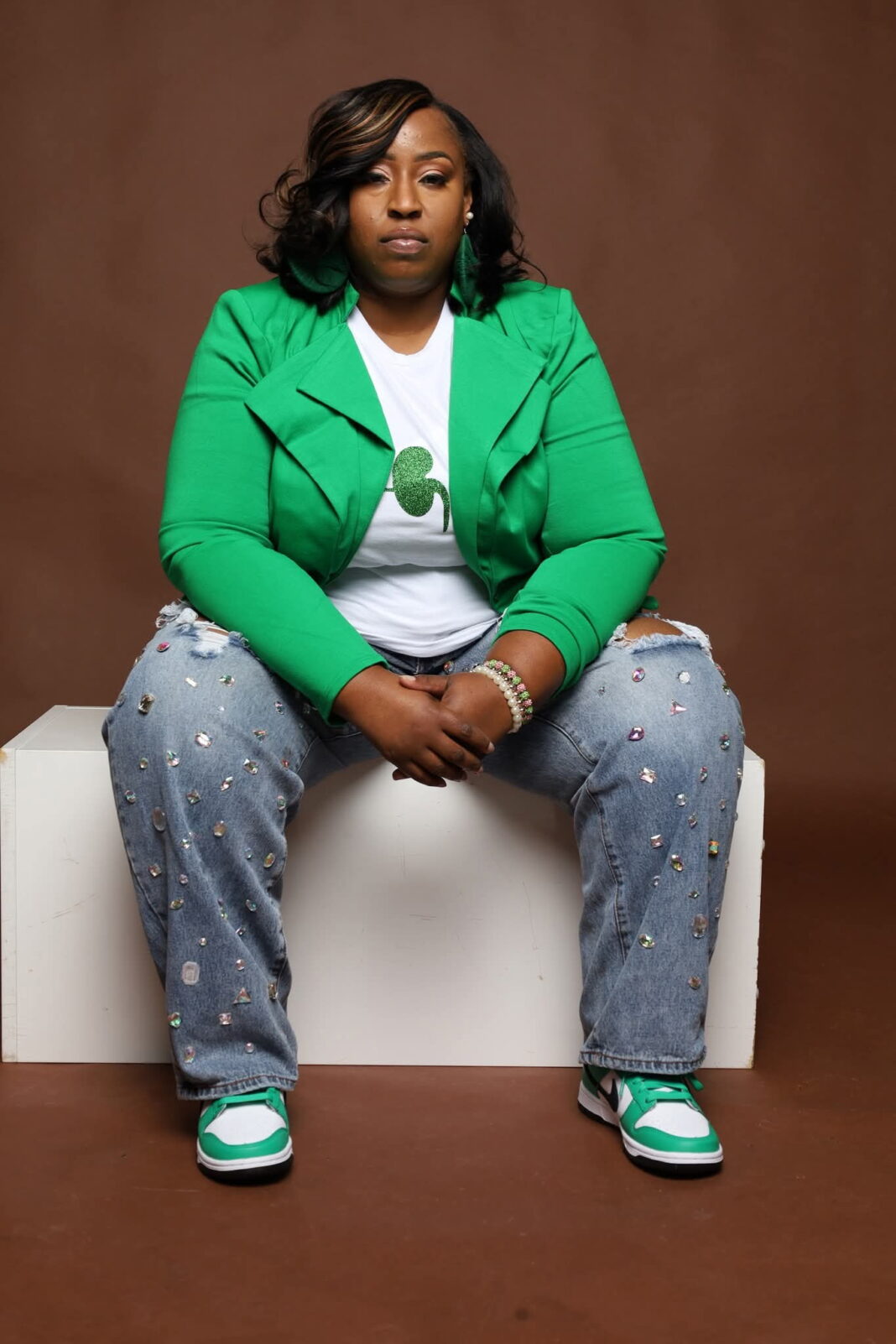
When Arnetta Scruggs sat alone on her couch in 2023, something didn’t feel right.
“I just realized, like, I’m here by myself. And nobody would know if something happened to me,” Scruggs said.
What began as a strange feeling after a long day working as a school social worker turned into a seven-day hospital stay — and a life-altering diagnosis she says no one initially explained to her.
Today, Scruggs is living with chronic kidney disease and undergoing dialysis five nights a week. Her story is one of resilience, frustration and a call to action — particularly for Black residents in Indianapolis, who face disproportionately high rates of kidney failure.
A diagnosis without answers
Scruggs, who was 41 at the time, said her symptoms weren’t obvious. She remembers feeling off at work one day after not eating, assuming food would fix the problem.
“I thought that’s all it was. And I just needed to eat,” Scruggs said.
But even after stopping for food, something still felt wrong. When she got home, the feeling didn’t go away.
A call to a family member, whom she affectionately referred to as her “auntie”, pushed her to go to the emergency room. She expected fluids and a quick discharge. Instead, she was admitted.
“I’m thinking, like, I just needed some fluids, and they will send me home,” Scruggs said. “And then a doctor came in and said, ‘Oh, we are admitting you into the hospital.’”
For days, she said, no one explained why.
“For at least five days, nobody told me anything,” Scruggs said. “I’m not gonna say they didn’t know, but they didn’t tell me.”
It wasn’t until a nephrologist — kidney specialist — entered her room that she began to understand the severity of her condition.
“She said, ‘These are your kidneys,’ and she showed me my kidneys,” Scruggs said. “And she said, ‘Do you really understand how sick you are?’ And I was like, ‘No, because nobody’s telling me anything.’”
That moment marked a turning point.
“I told her, I said, the other doctor, I don’t want him coming in here at all,” Scruggs said. “Because he — for five days, nobody explained anything to me. She came in here and explained everything to me.”
Living life on dialysis
Scruggs now undergoes peritoneal dialysis at home using a machine called a cycler. This treatment filters waste from the blood using the lining of the abdomen. .
“I do my dialysis at night for five times a week,” she said.
The diagnosis forced a complete reset of her daily life.
“Major,” Scruggs said, when asked how it changed things. “I had to figure out life, like time management.”
Her routine now includes strict attention to diet, managing medications and navigating additional health challenges, including a partial hysterectomy due to fibroids.
“Everything with life — changing my eating habits,” Scruggs said. “Things that you’re supposed to do, honestly, it’s more now gotta pay more attention to.”
She also experiences “brain fog,” a cognitive symptom that affects memory and focus.
“If I don’t write it down for me, it doesn’t exist,” Scruggs said.

A disproportionate burden
Scruggs’ story reflects broader disparities in kidney health.
According to the National Institute of Diabetes and Digestive and Kidney Diseases, more than 35 million adults in the United States have chronic kidney disease, and up to 90% of that number don’t know they have it. The same federal agency reports Black Americans are more than four times as likely as white Americans to develop kidney failure.
Those disparities are often linked to higher rates of high blood pressure and diabetes — both leading causes of kidney disease — as well as barriers to early detection and quality care.
“The data clearly show that kidney disease doesn’t affect all communities equally,” says Dr. Kirk Campbell, President of the National Kidney Foundation, in remarks tied to national awareness efforts. “Our goal is to raise awareness, encourage early detection, promote healthy lifestyle choices and start a conversation to improve the lives of those living with or at risk of CKD.”
According to Scruggs, her doctors said her condition could be tied to high blood pressure, though she still does not have a definitive answer.
“They said it could either be genetic, or it could be high blood pressure,” she said.
‘We have to become our own advocates’
Beyond the diagnosis itself, Scruggs said one of the most difficult parts of her experience has been navigating a health care system where she often felt unheard.
“We have to now do more,” Scruggs said. “We have to become our own doctors and our own advocates.”
Even as an educated professional, she said understanding her condition required independent research.
“I had to do my own research. I had to become my own doctor and be able to advocate for myself,” she said.
She believes that gap in communication can be even more dangerous for others.
“It’s bad when, as an educated woman, we feel this way,” Scruggs said. “And just think about the people that need more assistance.”
Scruggs also raised concerns about how providers communicate — or fail to — with patients who don’t yet know what questions to ask.
“I can’t ask you questions when I don’t know,” she said.

A message for the community
Now, Scruggs is using her experience to push others to take their health seriously — especially those who may be ignoring subtle warning signs.
“If you feel like something is not right, go to another doctor,” she said. “Like, it’s okay to get a second opinion or a third opinion.”
She encourages people to listen to their bodies and prioritize regular checkups.
“You know your body,” Scruggs said. “And if you feel like something is not right … we have to know our bodies and take care of us because nobody else will.”
For those newly diagnosed, she stresses the importance of community and education.
“You’re not the only ones going through this,” Scruggs said. “Find that support system.”
She also emphasizes educating loved ones about the realities of living with kidney disease.
“Some days you’re going to feel alone,” she said. “Because people just don’t understand.”
Waiting for a transplant
Scruggs is currently on the transplant list and searching for a living kidney donor. She has launched a website to share her story, answer questions and connect with potential donors.
“My insurance would pay for your hospital bills, transportation, all of that,” Scruggs said.
But beyond logistics, her story is about something deeper — awareness, urgency and the need to pay attention before it’s too late.
“There probably was signs that I ignored,” Scruggs said. “I’m just a busy person … and certain things you just have to really listen to your body.”
Now, she hopes others will listen sooner.
“I can’t do everything and I can’t be everywhere,” Scruggs said. “Because of what happened to me.”
For more information about Scruggs’ journey or to learn how to become a living kidney donor, visit advocatingforarnetta.com/.
This reporting is made possible by a grant from the Indianapolis African-American Quality of Life Initiative, empowering our community with essential health insights. https://iaaqli.org/
Contact Health & Environmental Reporter Hanna Rauworth at 317-762-7854 or follow her on Instagram at @hanna.rauworth.

Hanna Rauworth is the Health & Environmental Reporter for the Indianapolis Recorder Newspaper, where she covers topics at the intersection of public health, environmental issues, and community impact. With a commitment to storytelling that informs and empowers, she strives to highlight the challenges and solutions shaping the well-being of Indianapolis residents.