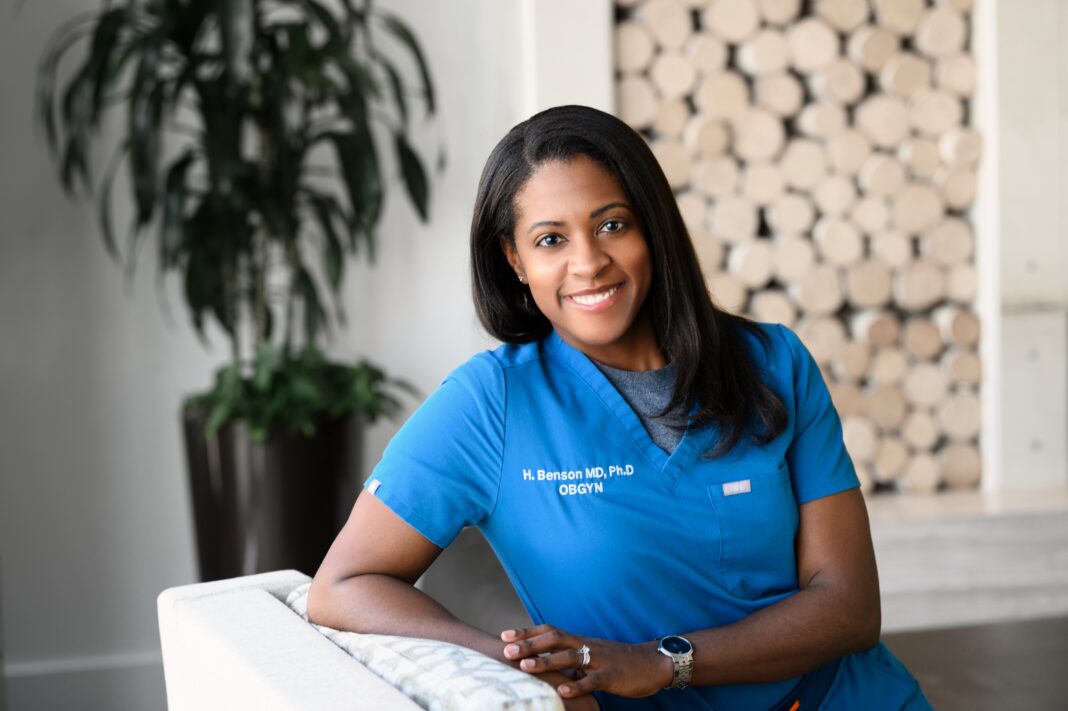
In Indiana, Black mothers and babies continue to experience disproportionately worse health outcomes despite overall improvements in maternal care. Barriers to early prenatal access, gaps in care coordination and systemic inequities in treatment continue to shape those outcomes. Dr. Heather Benson, an OB-GYN with Community Health Network, spoke with the Indianapolis Recorder about the causes behind these disparities, the challenges patients face and efforts to improve care.
Responses have been edited for length and clarity.

How would you describe the current state of Black maternal health in Indiana, and what is driving disparities?
Dr. Heather Benson: Black maternal health in Indiana remains a matter of urgency, frankly. Despite that, we continue to see progress in the overall maternal health numbers; it seems like Black mothers and babies still are facing way too high risks, which means basically they’re still having worse outcomes.
So, when you look at the statistics, Black women make up only about 13% of the births in Indiana. But when you look at the pregnancy-associated deaths or the pregnancy-related deaths, they make up at least 20 to 23%.
And when you look at the kind of disparities, you know, it’s not something that just showed up overnight. It’s due to generations of Black women facing worse outcomes in pregnancy and childbirth.
So, I always say it’s not the fault of the Black woman. It’s how they’re cared for. And so, we need to try to build systems that listen earlier, respond faster, follow up longer and support Black moms with respect before, during and after their pregnancy.

What challenges do Black patients face when accessing prenatal and postpartum care?
Benson: One of the big things we’ve seen is getting into care earlier, like within the first trimester, has been a challenge. That could be due to scheduling issues, work or childcare barriers.
The other one is maternity care deserts. I think it’s like a quarter of Indiana counties are maternity care deserts. Some women are more than 30 minutes away from a birthing hospital. That makes it harder to get to appointments and harder to get timely care.
Some CDC data reported that many women experience mistreatment during pregnancy and delivery, and that differences in how we respect moms are really rooted in discrimination.
For Black patients, this can look like being minimized when they report pain, being dismissed, or concerns not being acted on quickly enough.
So it’s not just access to one appointment. It’s really about having available, responsive, respectful and sustained care.
What warning signs during pregnancy or postpartum are often overlooked?
Benson: Severe headaches, vision changes, swelling of the face or hands, shortness of breath, chest pain, heavy bleeding, fevers, dizziness or fainting, or just feeling like something’s not right.
These symptoms can be overlooked if you present to a care facility. So, it’s important for moms to share what they are experiencing and to be heard.
If you feel like you’re not being heard, keep speaking up and speaking out. Advocate for the care that we all deserve.

Are there efforts at Community Health Network to address these disparities?
Benson: Community is trying to reach patients earlier in pregnancy. They have an intake team that contacts patients to help initiate early prenatal care.
We also have a perinatal nurse navigation program where a registered nurse guides families through pregnancy, labor, delivery and postpartum. They help with issues such as medications, food insecurity and barriers to housing and transportation.
We do virtual perinatal support groups every Tuesday, plus doula support, childbirth education classes and midwifery care in some locations.
Community has also sought to standardize maternal care across the network by implementing updated order sets and evidence-based practices to reduce risks and complications.

What gives you hope moving forward?
Benson: The fact that we’re talking about it means change is still possible. The Indiana Maternal Mortality Review Committee found that the majority — I think it was like 83% — of pregnancy-associated deaths were preventable.
So, although that’s a terrible number, it means there’s work to be done and an opportunity to improve outcomes.
Indiana is not trying to stand still. They’re trying to move forward with programs like Indiana AIMs to improve maternal safety using evidence-based practices.
Providers, patients and community advocates can now talk openly about Black maternal health and these disparities. Improving maternal health means making sure that Black moms are heard, respected and supported throughout pregnancy, birth and postpartum.
For more information about Community Health’s efforts to improve maternal health outcomes, visit ecommunity.com/healthminute/2025/improving-maternal-health-outcomes.

Hanna Rauworth is the Health & Environmental Reporter for the Indianapolis Recorder Newspaper, where she covers topics at the intersection of public health, environmental issues, and community impact. With a commitment to storytelling that informs and empowers, she strives to highlight the challenges and solutions shaping the well-being of Indianapolis residents.