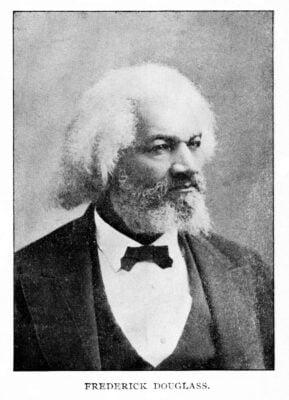
In 1852 Frederick Douglass agreed to speak at a July 4th celebration in New York. In his speech he recognized July 4th as the birthday of this nation’s political freedom. He noted that this nation’s founding fathers pronounced the restraints, burdens, and limitations imposed on them by the British Parliament as acts that were “unjust, unreasonable, and oppressive.”
He applauded the perseverance of the founding fathers who saw the colonies as victims of grievous wrongs that needed to be righted and who earnestly sought to end their oppression. He called them brave and congratulated them for declaring the united colonies as “free and Independent States.” He reminded his audience that the courage of the nation’s founding fathers allowed them to reap the benefits of freedom.
He urged his listeners to stand by the principles stated in the Declaration of Independence and to always be true to those principles at whatever cost. He spoke of the hope of possibilities associated with a young nation that was only 76 years old. I can imagine the thunderous applause he received as his audience hung on to every word. I can imagine the crowd standing to their feet in agreement with his statements. I, too, agree with his words.
Then, in the middle of his great speech, he asked a rather peculiar question, “…why am I called upon to speak here today? What have I, or those I represent, to do with your national independence?” Douglass, a previously enslaved Black man, was speaking in 1852. Slavery wasn’t abolished until 1865. His question required a response. None was given.
July 4, 2026 denotes 250 years that this country has been independent of British rule. The annual holiday celebrates freedom — freedom from British tyranny and oppression.

Yet, the unanswered question from Douglass remains profoundly true for Blacks today, “What is the 4th of July to us?” Are the principles of political freedom and natural justice embodied in the Declaration of Independence extended to Black Americans? While chattel slavery was abolished in 1865, political, social, financial, and legal disenfranchisement of Blacks remains a challenge in 2026.
In some ways significant progress has been made. However, a closer look at recent policies reveals practices that appear race-neutral but have severe negative consequences for Black Americans.
Examples include political policies affecting voting in elections such as stricter voter ID requirements, closure of polling locations, reductions in early voting, and, of course, gerrymandering (redistricting that dilutes Black voting power by reducing the ability of Black communities to elect representatives of their choice).
Financial practices such as appraising homes in predominantly Black neighborhoods at lower values continue. This impacts home equity, ability to generate generational wealth, and access to credit. And, let’s not forget the assault on Black history with educational policies.
The African Proverb I live by is “Until the lion tells the story, the hunter will always be the hero.” For centuries the “hunter” has been telling our story. In the late 19th century we began to take control of our own narrative, telling truth our way.
The contemporary response from educational districts across this country has been to restrict or ban reading materials that focus on systemic racism and to challenge culturally responsive curriculum. The impact of such educational policies is far reaching and includes erasure of relevant historical context, a white-washed understanding of U.S. history, and marginalization of Black experiences and contributions.
Two hundred and fifty years after the colonies gained freedom from the British Crown and 161 years after slavery was abolished, Blacks are too often still victims of “unjust, unreasonable, and oppressive” practices and policies. The unanswered question remains unanswered, “What is July 4th to us?” It is now couched differently: “When will Black lives matter?”
Frederick Douglass did not ask his question merely to provoke thought; he asked it to provoke action. The call before us is clear: learn the truth, tell the truth, protect the vote, defend honest education, challenge policies that produce inequitable outcomes, and refuse to be silent when injustice wears the disguise of neutrality.
Black Americans cannot carry this burden alone. Just as abolition and the Civil Rights Movement required the courage of Black people and white allies working together, the unfinished work of freedom requires all of us today. If we truly believe the words of the Declaration of Independence, then we must demand that its promises be extended equally to every American. Only then will we finally be able to answer Douglass’s question — and celebrate an Independence Day that belongs to all of us.
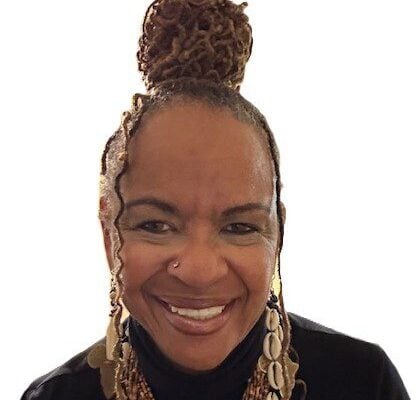
By Maxine Bryant, Ph.D., is the founder of GriotSpeaks, an author, and an African American culture keeper. Contact her at mlb@drmaxinebryant.com or visit drmaxinebryant.com.
MAXINE BRYANT
Maxine Bryant, Ph.D. is the founder of GriotSpeaks, author and African-American culture keeper. Dr. Bryant replaces mythology with truth about Africa and the African Diaspora experience. Learn more about her at www.drmaxinebryant.com and email her at mlb@drmaxinebryant.com.