The Trump administration, in yet another unprecedented move, has established “The Anti-Weaponization Fund” for people claiming wrongful treatment by previous administrations.
This fund was established as part of Trump, his family’s and the Trump Organization LLC’s settlement with the Internal Revenue Service (IRS) in the Southern District of Florida “following the leak of their tax returns,” according to a Department of Justice press release. Additionally, the plaintiffs, including his sons Donald Jr. and Eric, will receive a formal apology.
In lieu of monetary damage, they have agreed to the establishment of this Anti-Weaponization Fund, which will receive $1.776 billion from the judgment fund.
“The machinery of government should never be weaponized against any American, and it is this Department’s intention to make right the wrongs that were previously done while ensuring this never happens again,” Todd Blanche, acting attorney general said. “As part of this settlement, we are setting up a lawful process for victims of lawfare and weaponization to be heard and seek redress.”
The redress in question may include Trump supporters who feel like they were wrongfully investigated or prosecuted by previous administrations. The fund could also be used to compensate people involved with the Capitol riots on Jan. 6, 2021.
Capitol Police officer Harry Dunn and Metropolitan Police Department officer Daniel Hodges, who were present at the riot are suing to block the creation of the Anti-Weaponization Fund.
When Trump returned to the presidency, on his first day in office, he granted clemency to every person charged or convicted for their involvement in the Jan. 6, 2021 attack on the U.S. Capitol. If this fund moves forward, some of those people may also receive financial compensation. A five-member commission, appointed by Blanche, will review the claims.
Redress or reparations?
Some of the rioters lost jobs, went to prison or endured other undesirable outcomes.
And what some call redress, others are referring to as reparations.
Comedian D.L. Hughley said that if people unjustly treated by the government are receiving financial restitution, “Black people should be the first in line.” Isn’t there a bit of truth in comedy?
If you begin at the beginning, Black Americans have endured centuries of mistreatment at the hands of the government. This is undeniable.
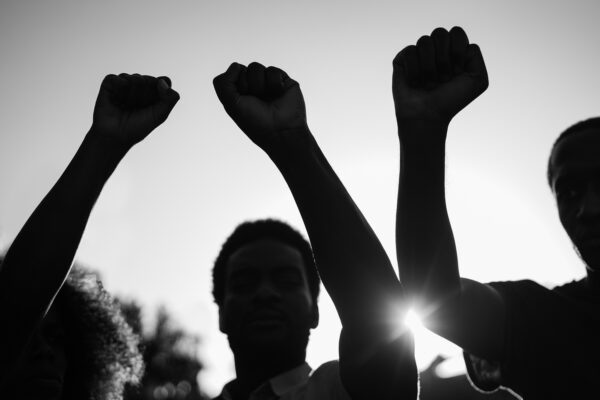
The U.S. government, specifically the U.S. House of Representatives in 2008, formally apologized for slavery, but no compensation was offered for the descendants and communities of those affected by slavery’s atrocities. But the mistreatment does not end with slavery.
For centuries, enslaved people were not even allowed to read or write, a foundational step toward autonomy and liberation. Then, following emancipation, they were still not allowed to operate as equal citizens with full access to voting, higher education, property ownership and so on.
Several decades after slavery ended, Hughley noted the many thriving Black communities that were massacred and destroyed due to systemic racism. If those communities (i.e. Tulsa, Seneca Village, Rosewood) do not deserve financial redress from the government, after ignoring their suffering for generations, then who does?
Generational implications
In the Pulitzer Prize winning book, “Invisible Child: Poverty, Survival & Hope in an American City” by New York Times journalist Andrea Elliott, she explores the present-day face of child poverty. Elliott spent more than a decade following the central figure, Dasani, a Black girl living in New York, and her family. Throughout the years covered in the book, Dasani’s family experienced substance abuse, interactions with the child welfare system and bouts of homelessness.
Beyond just sharing the family’s current financial status, Elliott recounts how they got there. She thoroughly researched the family’s background and learned that Dasani’s grandfather was a Buffalo Soldier. Where he should have been heralded for his service to this country, he returned to face one obstacle after another.
After World War II, the GI bill allowed veterans to purchase homes in suburban areas, creating middle class neighborhoods. Unfortunately for his descendants, Dasani’s grandfather was denied access to the GI Bill benefits. He was also denied higher-paying jobs at local companies because of his race. Subsequently, he came home from the war and became a janitor. These circumstances from decades prior, set this family on a pathway to poverty that they had not recovered from by the book’s end in the mid-2000s.
But that’s just one family’s story. Imagine the thousands, or hundreds of thousands of Black families who share a similar tale.
The U.S. has already paid reparations
This country is familiar with the practice of paying reparations. I’ll share some examples.
The U.S. paid reparations to Italy for Sicilians who were lynched in New Orleans in the late 1800s. A court case involving Italian immigrant defendants concluded in an acquittal due to a lack of evidence. Residents were encouraged by local newspapers to take matters into their own hands. A mob of people forcefully entered the prison and shot, mutilated and hung 11 men; two victims’ bodies were hung nearby.
Italy aimed to break diplomatic ties with the U.S. over the lack of resolution. Calling the incident, “deplorable and discreditable” and “an offense against the law of humanity,” President Benjamin Harrison paid $25,000 in reparations to the victims’ families. This would be nearly $1 million today.
The U.S. also paid reparations to people of Japanese descent following the World War II internment camps through the Civil Liberties Act of 1988, to the tune of “$20,000 for each eligible individual.”
If these communities were paid, and there is a strong possibility that the Capitol rioters (or should we now say protestors? Visitors?), will be paid, then what is still standing in the way of Black American communities receiving restitution?
Over the years some have argued that handing out checks would not be the best way, nor would community investments or funding free higher education. The methodology has been debated incessantly. But what it boils down to is a decision of whether reparations are due to Black Americans at all, and that response has consistently been “no” or “not yet.”
It should be noted that the Anti-Weaponization Fund did not take centuries to decide. Neither did the two cases of reparations mentioned above. And, as Black Americans witness yet another case of redress for others, “not yet” is surely taking far too long.
Contact Editor-in-Chief Camike Jones at camikej@indyrecorder.com or 317-762-7850.

Camike Jones is the Editor-in-Chief of the Indianapolis Recorder. Born and raised in Indianapolis, Jones has a lifelong commitment to advocacy and telling stories that represent the community.