Gary residents have power again after more than two weeks of outages — but there is a long road ahead to recovery after devastating floods. There needs to be accountability from NIPSCO, Northwest Indiana’s electricity provider — and the Indiana Utility Regulatory Commission (IURC), which approved NIPSCO rate hikes without any guardrails to protect customers.
Residents who pay their electricity bills every month have every right to expect NIPSCO to maintain its system, prepare for emergencies, communicate honestly and restore service as quickly as possible when disaster strikes.
That did not happen.
Many Hoosier communities were hit hard by flooding and storms, including Indianapolis. But no city experienced such widespread and prolonged power outages as Gary, Indiana’s only majority-Black city. Approximately one-third of Gary residents live below the poverty line. Many families cannot afford to replace refrigerators full of food, pay for hotel rooms, or miss work because their homes were unsafe.
After the storms, Gary was not even listed in NIPSCO’s publicly available estimates for power restoration. As NIPSCO restored service to more than 300,000 customers, tens of thousands of Gary residents were still without power.
Residents deserve a full account of why. It comes down to NIPSCO’s failure to adequately prepare for and respond to the storms, maintain their infrastructure, communicate with the affected communities, and use ratepayer funds as promised. Residents also deserve full accounting for the IURC’s failure to hold utility companies accountable while approving rate hikes.
Governor Braun recently tasked the IURC with investigating NIPSCO following these prolonged outages. I’m glad to see the IURC will be investigating NIPSCO, but I’m skeptical, given the commission’s history. The IURC approved rate hikes last year without any guardrails to protect consumers. Recently NIPSCO requested three separate rate hikes — including on Aug. 11, the same day severe storms hit Northwest Indiana.
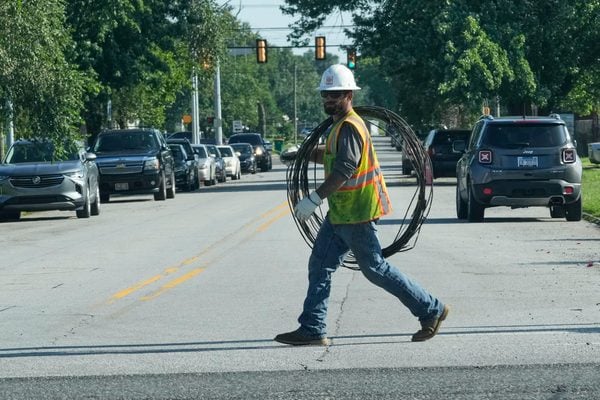
These rate hikes are already unreasonable to families who have not increased their personal energy usage. But when a company fails to provide power for over two weeks — in the sweltering summer heat — rate hikes are nothing short of outrageous.
It’s part of a larger trend of utility companies passing costs along to customers. I wrote last month about BlackRock’s proposed acquisition of AES and the risk that the deal will raise utility costs for Indianapolis residents while prioritizing corporate profits.
The companies and circumstances may be different, but the principle is the same: Utility customers should not be footing the bill while corporate owners and executives reap the rewards. NiSource, NIPSCO’s parent company, reported their CEO made $13.2 million last year.
When corporations demand customers pay more money for the same services, those corporations need to uphold their end of the bargain. The IURC could have ensured NIPSCO’s rate increases came with a guarantee that NIPSCO would improve the electric grid, and plan for energy savings long term. But they didn’t.
What’s happening in Gary is unfortunately not new. We’ve seen Black communities suffer disproportionately during major disasters — from Hurricane Katrina and Andrew to Superstorm Sandy — and then wait the longest for help and recovery.
We can and should do better.
Now that recovery is underway funding is available to help families in Gary and across the state. I helped secure federal funds to help our state recover.
Indianapolis was also hit hard, and there are many households who desperately need assistance. Families can apply to the Indiana State Disaster Relief Fund for up to $5,000 by calling 211. They can also apply for FEMA funding at disasterassistance.gov or by calling 800-621-FEMA (3362).
I have long fought to fully fund FEMA for this exact reason. These resources are critical to the long recovery ahead of our state.
But we also need long term accountability for utility companies that take advantage of consumers.
That’s the job of the Indiana Utility Regulatory Commission. Accountability cannot end when the lights come back on and we can’t only wait for disaster to strike to act. Utility companies that ask customers to pay more must prove they are delivering safer, stronger and more reliable service. The commission needs to start fighting for Hoosiers — not helping utility companies’ bottom line.