What we owe our ancestors most is to remember, to learn and to keep moving forward. We stand on the shoulders of multiple generations of people who simply would not give up. It was their sacrifices that allowed us the privileges and freedoms we sometimes take for granted.
Our rights to own property, vote and express our identity freely come from generations before who fought for them. There was no way for them to know that their efforts would be successful, but they still pressed on, holding on to hope that one day a future generation would be in better standing.
Our ancestors endured what must have seemed like insurmountable odds. Family lines still standing today come from people who were determined to live fully and to leave the world a little better for future generations.
Freedom is never given
“We know through painful experience that freedom is never voluntarily given by the oppressor; it must be demanded by the oppressed,” said Martin Luther King Jr. In his “Letter from the Birmingham Jail.”
There were many slave revolts in America. No, it was not solely the benevolence and kindness of the ruling class that led to the abolishment of slavery; it was the relentless pursuit of freedom from the enslaved.
Historian Herbert Aptheker, author of “American Negro Slave Revolts,” found a record of approximately 250 revolts, involving 10 or more enslaved people, and conspiracies. Some scholars have found more than 300 revolts.
Where would we be without those rebels, those restless spirits who could not stop dreaming of freedom?
During Reconstruction, in the period following slavery, Black Americans created safe spaces amongst one another, as the outside world perpetuated segregation through Black codes and Jim Crow laws.
Many Black Americans moved north during the Great Migration of the 1900s, seeking community and opportunities for educational and economic advancement. Yet, there were still challenges to endure — discrimination in housing, business and schools. There was more work to be done.
The Civil Rights Movement, a combination of coordinated action spanning multiple states, courtrooms, community groups and grassroots organizations, led to many of the privileges we share now.
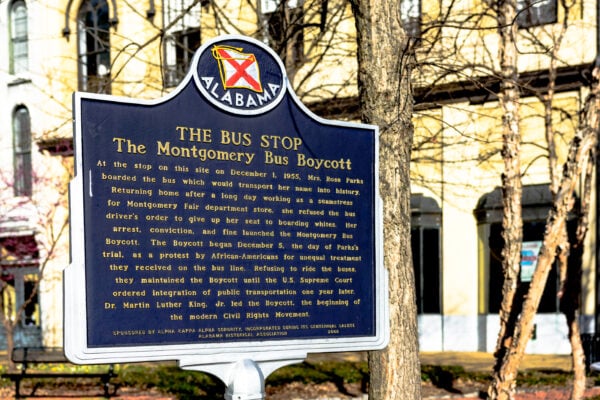
The Montgomery Bus Boycott was a multipronged effort, reaching far beyond Rosa Parks’ refusal to move to the back of the bus. This movement was made possible by the many everyday people who offered transportation, walked together to and from work, opened up meeting spaces and provided basic needs for those in the movement.
The Student Nonviolent Coordinating Committee (SNCC) organized young people to prepare them for nonviolent protests, teaching them to withstand attacks and to resist the urge to fight back physically in favor of the long-term goal of equality on a larger scale.
Each aspect of these movements required gifts and talents on every level, from basic needs like food and medical care to meeting spaces and strategic thinking. Someone had to write the words, type and print the flyers. Someone had to get the word out about the meeting, be the lookout and keep the attendees safe so they could be about the work of progress.
Living in the vision
Black Americans have long been visionaries, living and working presently in the hope of creating a different future. When we look to the past, we see countless examples of both strength and imagination.
What kind of otherworldly creativity did it take for enslaved people to encode the routes to free states in braids and songs?
Our ancestors had no idea if or when their work would be rewarded. There must have been days that seemed hopeless and times that seemed like their cries fell on deaf ears. But they did not give up.
So, we must push forward, even when the outcome appears to be uncertain, and perhaps especially when there is no ending in sight. There have been rough times before, and unfortunately, they will happen again.
I can only imagine that our foremothers and forefathers dreamed of some of the experiences we are living now. We can thank them by continuing to push, to rebel against oppression and to envision a world that does not yet exist. But not just to envision it, to create it, as they did for us.
Contact Editor-in-Chief Camike Jones at 317-762-7850 or camikej@indyrecorder.com.

Camike Jones is the Editor-in-Chief of the Indianapolis Recorder. Born and raised in Indianapolis, Jones has a lifelong commitment to advocacy and telling stories that represent the community.